




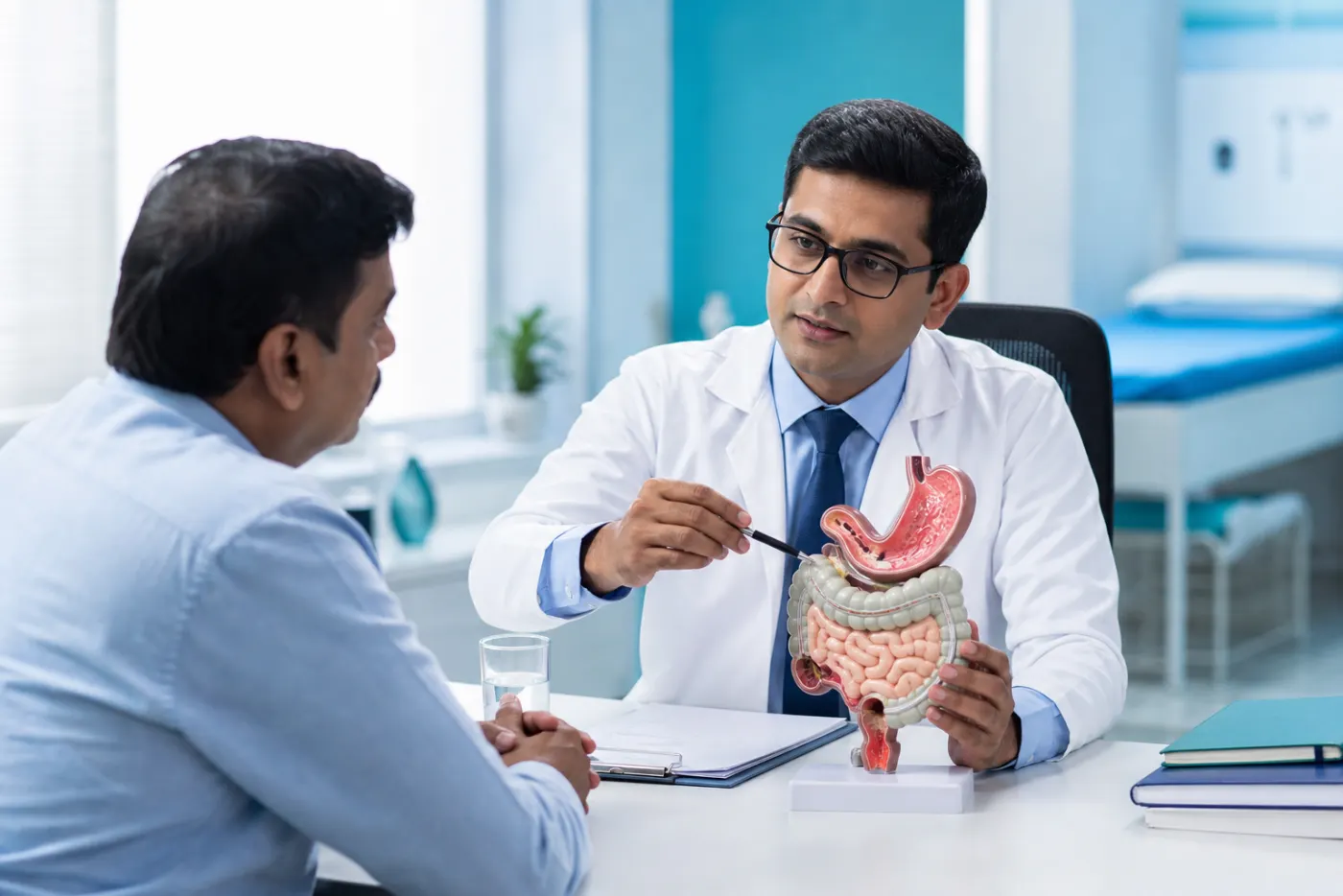
Gastrointestinal Cancer Treatment in Patna & Darbhanga
Gastrointestinal (GI) cancers include tumours of the stomach, colon, rectum, liver, pancreas, gallbladder and other digestive organs. These diseases are common reasons for oncology referral in Bihar, and many patients present with advanced symptoms after prolonged indigestion remedies. Cancer Care Hospital in Patna provides surgical and medical oncology pathways for GI cancers with attention to nutrition, staging and realistic recovery planning.
Symptoms vary by site but may include blood in stool, progressive constipation or diarrhoea, unexplained anaemia, persistent abdominal pain, jaundice, early satiety, vomiting or marked weight loss. Rectal bleeding should never be assumed to be only piles without proper evaluation, especially after mid-life. Early endoscopy or imaging, when indicated, can detect lesions while they are still surgically treatable.
Diagnosis and staging often involve endoscopy with biopsy, CT or MRI, tumour markers as adjuncts (never alone), and multidisciplinary review. Colon and rectal cancers need precise local staging to decide between upfront surgery and neoadjuvant therapy. Stomach and pancreatic cancers require careful assessment of resectability. We review outside investigations and recommend only tests that change the treatment sequence.
Surgical oncology for GI cancers may include colectomy, rectal resection, gastrectomy or hepatobiliary procedures when disease is operable. Stoma creation is sometimes temporary or permanent; we counsel patients and families about stoma care before surgery so the transition is less frightening. Minimally invasive approaches are considered when oncologically safe and technically suitable.
Chemotherapy and targeted therapy are used before or after surgery depending on stage, and as primary treatment for unresectable or metastatic disease. Side-effect management—nausea, diarrhoea, neuropathy, mouth sores and infection risk—is essential for completing planned cycles. Nutrition support is especially important for GI cancer patients who already struggle to eat; dietitians’ advice and, when needed, feeding strategies are integrated into care.
Patients travelling to Patna from across Bihar for GI cancer surgery should plan for a longer recovery window than minor procedures. We discuss expected diet progression, wound care, drain management and red-flag symptoms such as fever, severe pain or vomiting. Darbhanga centre visits can support follow-up closer to home when clinically appropriate.
Surveillance after curative treatment includes clinical exams, tumour markers when useful, and scheduled imaging or colonoscopy based on guidelines and individual risk. Lifestyle counselling covers diet, activity and tobacco cessation. Second opinions on operability are common in GI oncology—we provide honest assessments about cure probability versus palliative intent so families can plan finances and caregiving.
At Cancer Care Hospital, GI cancer care in Patna is built around clear staging, skilled surgical oncology and coordinated systemic therapy. Our aim is to give patients across Bihar a structured path from first diagnosis to treatment and survivorship follow-up without unnecessary delay.
Multidisciplinary input matters for rectal, pancreatic and liver tumours where sequencing of chemotherapy, radiation and surgery can decide resectability. We do not rush patients into irreversible operations without staging clarity. Equally, we do not delay operable cancers with endless testing that does not change management.
Caregivers should learn medication schedules, diet stages after GI surgery and signs of anastomotic problems such as severe pain, fever or drainage changes. Written discharge advice in simple language helps families returning to towns across Bihar after major GI cancer surgery in Patna.
Screening conversations matter for colorectal risk: family history, age and prior polyps change surveillance intervals. While population screening access varies across Bihar, symptomatic patients should never delay colonoscopy when bleeding or altered bowel habits persist. Prevention and early detection remain the best GI cancer strategy alongside expert treatment at our Patna centre.
Hydration and protein intake support healing after major abdominal surgery. Families sometimes focus only on “bland food” and underfeed recovering patients. We provide staged diet advice matched to the operation performed. Good nutrition is not optional; it is part of GI cancer treatment success at Cancer Care Hospital.
What We Offer
- Stomach, colorectal & hepatobiliary focus
- Surgical oncology for GI tumours
- Neoadjuvant & adjuvant therapy planning
- Nutrition support during treatment
- Staged follow-up after surgery